> For the complete documentation index, see [llms.txt](https://support.caspen.com/llms.txt). Markdown versions of documentation pages are available by appending `.md` to page URLs; this page is available as [Markdown](https://support.caspen.com/integrations/google/set-up-google-meet-integration.md).
# Set up Google Meet integration
Learn how to connect Google Meet and create meeting links for telehealth appointments.
## Overview
To use Google Meet in Caspen, you must first connect Google Calendar. Once Google Calendar is connected, Google Meet is automatically enabled and you can create **Google Meet meeting links** for appointments.
Once connected, you can:
* Set up services to automatically create Google Meet links
* Create a Google Meet link from an appointment when needed
* Join or copy the meeting link from the appointment
***
## Before you start
* Google Meet in Caspen relies on your Google Calendar integration. You must connect Google Calendar before you can create Google Meet links.
* Each practitioner must connect their own Google integration to create Google Meet meetings.
***
## How to connect to Google Calendar
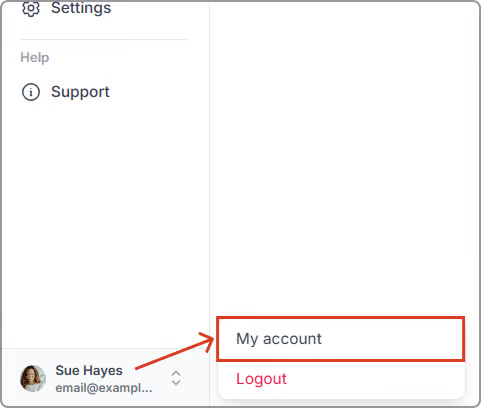
1. In Caspen, click your profile name (bottom-left), then click **My account**.
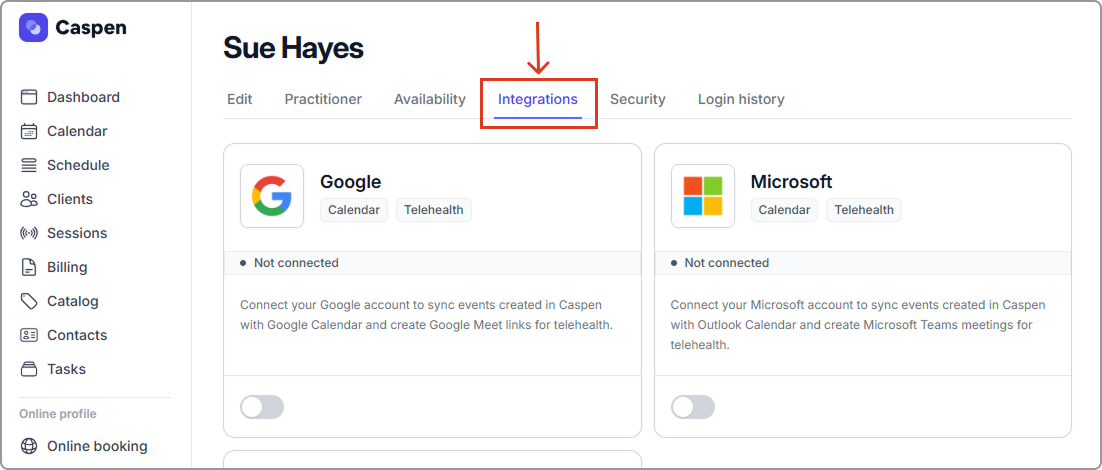
2. Open the **Integrations** tab.
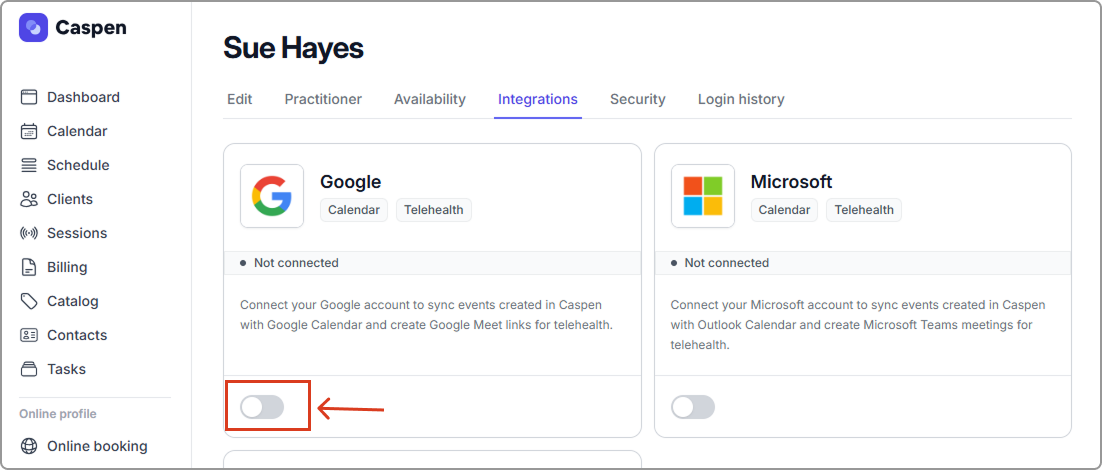
3. Find **Google** and toggle it on.
4. Choose how far back you want to sync existing events:
* **From now onwards** (only sync future events)
* **From 7 days ago** (sync the past week and future events)
* **From 30 days ago** (sync the past month and future events)
5. Click **Connect**.
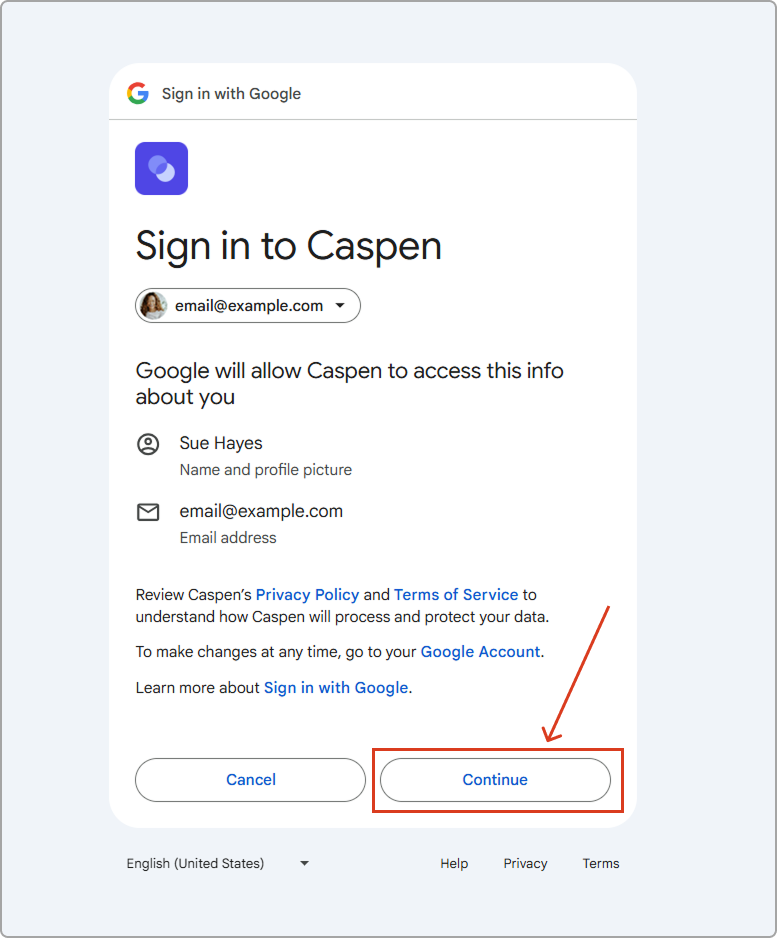
6. Google will open. Sign in, or if you are already signed in, choose the Google account you want to connect.
7. Click **Continue** to allow Caspen access.
8. **Make sure calendar access is selected**, then click **Continue**.
You will be redirected back to Caspen. The Google integration will show Connected and **Google Meet** integration will be enabled automatically.
{% hint style="info" %}
**Note:**
When you connect, Caspen creates a calendar called **Caspen** in your Google Calendar. We recommend you **do not rename** this calendar to keep your Google integration running smoothly.
{% endhint %}
***
## Automatically create a Google Meet link for a service
Turn this on when you want Caspen to automatically create a Google Meet meeting link whenever that service is booked.
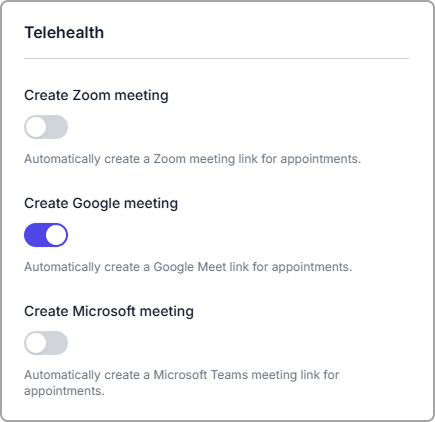
In **Catalog → Services**, create or edit a service, then under **Telehealth** turn on **Create Google meeting**, then click **Save**.
**What happens next**
* When an appointment is booked using that service, Caspen will automatically create a **Google Meet meeting link**.
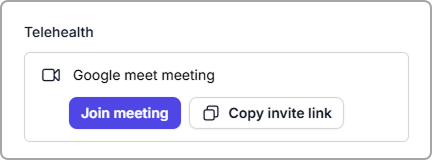
* In the appointment, you will see a **Telehealth** section with:
* **Join meeting** – Opens the meeting straight from the appointment.
* **Copy invite link** – Copies the **Google Meet meeting link** so you can share it with your client.
{% hint style="info" %}
**Important notes**
* This setting applies per service. If you have multiple telehealth services, you need to enable it for each one.
* Meeting links can only be created in Caspen when your Google integration is connected.
* **Note:** Clients won’t receive the **Google Meet meeting link** unless you share it (for example, by copying the meeting invite link into your message or email).
{% endhint %}
***
## Create a Google Meet link from an appointment
If you haven’t enabled automatic Google Meet links for the service, you can create a Google Meet link from an existing appointment.
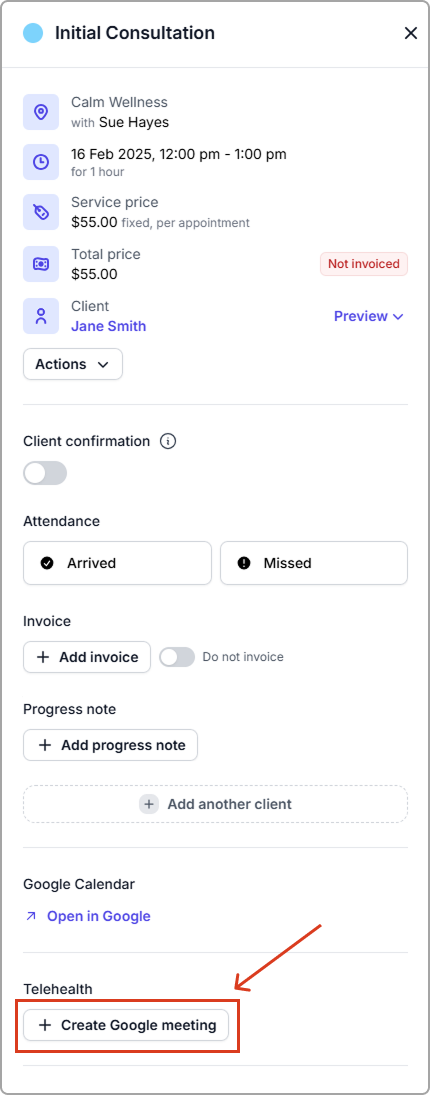
1. In the Calendar, click the appointment to open it.
2. Scroll to the **Telehealth** section, then click **Create Google meeting**.
After the meeting is created, you’ll see the following in the appointment:
* **Join meeting** – Opens the meeting straight from the appointment.
* **Copy invite link** – Copies the meeting link so you can send it to your client.
**Note:** Clients won’t receive the link unless you share it manually (for example, by sending the copied invite link).
***
## Frequently asked questions
Why is there a delay before the Google Meet link appears in my Google Calendar?
This can happen sometimes. Caspen needs to sync the appointment to Google Calendar first. Once the calendar event exists, Caspen can attach the Google Meet link. If you do not see it yet, wait a moment and refresh Google Calendar.